

Be a Voice for the River
We need your help to protect the River – speak out!
Writing or calling elected officials, attending public hearings, and signing petitions all of these actions make a difference! Each letter or voice helps to ensure that elected officials and government agencies ensure the protection of the St. Lawrence River.
Blind Bay is an environmental treasure and has open and protected wetland areas. It has served as a long-term aquatic habitat research site monitored by the Thousand Islands Biological Station (TIBS) and has been documented as one of the most prolific muskellunge spawning areas in the Thousand Islands. Learn more at saveblindbay.com
Save The River was formed in 1978 to fight proposals for year-round navigation on the St. Lawrence River. Learn more about Save The River’s work to prevent shipping in ice conditions here.
Learn more about Plan 2014, the International Joint Commission (IJC), and Save The River’s campaign for improved water level regulations here.
Save The River advocates for better septic testing protocol at the local, state, and federal levels. Learn more about the legacy of our now-retired Kingfisher Water Quality Program, and read our Sewage Handbook.
Learn about aquatic invasive species and Save The River’s campaign to stop their introductions here.
A spill from one of the many ships passing by each day on the St. Lawrence Seaway would have devastating impacts on the River environment and our local economy. Learn more about Save The River’s involvement in spill response planning.
Learn about Save The River’s work to prevent the expansion of Seaway infrastructure here.
Save The River is concerned about the scale and siting of proposed power projects in the region. Read more about it here.
Invasive species have historically entered the St. Lawrence River and Great Lakes through the discharge of ballast water from commercial vessels. These introductions can cause significant ecological and economic harm. Save The River remains committed to advocating for stronger regulations, improved ballast-water management practices, and increased protections to safeguard our watershed now and for future generations.
As “hyperscale” data centers expand in the region, they pose a significant, often invisible threat to the health of the Upper St. Lawrence River. While marketed as clean tech, their industrial footprint poses a risk to our water levels and ecosystem safety.
Core Environmental Risks:
- Massive Water Consumption: A single facility can consume millions of gallons daily. Many use evaporative cooling, which “drinks” the water and releases it as steam rather than returning it to the River, potentially lowering water levels in sensitive habitats (EESI).
- Thermal Pollution: Discharging warm “blowdown” water into the St. Lawrence can disrupt cold-water fish species, trigger toxic algal blooms, and alter the River’s delicate thermal balance (River Network).
- Toxic Contamination: Data centers often utilize PFAS (forever chemicals) in cooling and fire suppression. Furthermore, construction and dredging for water intakes risk resuspending legacy PCBs currently buried in the riverbed (CHEM Trust).
- The Transparency Gap: Operators frequently classify water usage as “proprietary,” making it difficult for the public to monitor the true impact on our local watershed.
Our Position: Save The River advocates for mandatory transparency, the use of closed-loop cooling to eliminate water waste, and strict protections against chemical runoff to ensure the St. Lawrence remains healthy for generations to come.
Issues We’re Following
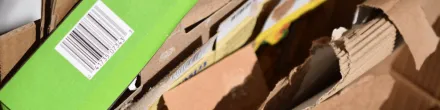
Packaging Reduction & Recycling Infrastructure Act
NY State Assembly Bill S1464
In the Senate Committee
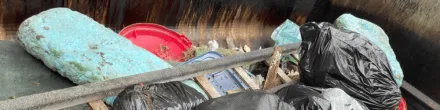
Banning the use of polystyrene foam docks, buoys, and floating structures
NY State Assembly Bill S1129
In the Senate Committee
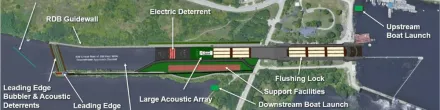
Brandon Road Project Stalled
Phase I of the US Army Corps of Engineers’ latest project to block invasive carp in the Des Plaines River, IL, was abruptly canceled on February 11, 2025, due to the Federal funding freeze. President Trump’s administration is withholding $117 million in federal infrastructure grants, including funds for the Brandon Road Project.
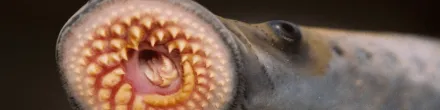
Federal Firings Hit Sea Lamprey Prevention Program
As part of the February 14th nationwide purge of federal workers, 14 employees responsible for operating the invasive Sea Lamprey prevention program at the US Fish & Wildlife Service were fired.
Protect NOAA
The Trump Administration has threatened a total dismantling of NOAA as part of sweeping cuts to environmental-related agencies within the Federal government.
NPR Coverage
Packaging Reduction & Recycling Infrastructure Act
NY State Assembly Bill S1464
In Senate Committee

Endangered and Threatened Species: Species Status with Section 4(d) Rule for Monarch Butterfly and Designation of Critical Habitat
The Fish and Wildlife Service proposed a rule that will list monarch butterflies (Danaus plexippus) as a threatened species.
More about the Proposed Rule

Water Levels
Know Your Reps
Stay informed and empowered by connecting with your state representatives. Learn who represents you, what issues they focus on, and how to reach out to make your voice heard on policies that impact your community and the environment.
State
Congressional



Know Your Regions

Department of Environmental Conservation (DEC) Region 6
Region 6 Headquarters:
317 Washington St.
Watertown, NY 13601
(315) 785-2239
DEC Contact Website

Environmental Protection Agency (EPA) Region 2
Region 2 Main Regional Office:
290 Broadway
New York, NY 10007